THE All New PATRIOTIC MICRO CHIP
is intended to be implanted in terrorists. The implant is specifically designed to be injected in the forehead.
When properly installed, it will allow the one implanted, to speak to God.
It comes in various sizes:
The exact size of the implant will be selected by a well-trained and highly skilled technician, who will also make the injection. No anesthetic is required.
The implant may or may not be painless. Side effects, like headaches and nausea, aches,and pains are extremely temporary.
Some bleeding or swelling may occur at the injection site. In most cases, you won't even notice it.
Please enjoy the security we provide for you.
Best regards,
"Government is not reason, it is not eloquence, it is force; like fire, a troublesome servant and a fearful master. Never for a moment should it be left to irresponsible action." George Washington
"You probably missed this in the rush of news, but there was actually a report that someone in Pakistan had published in a newspaper, an offer of a reward to anyone who killed an American, any American. An Australian dentist wrote an editorial response called "To Kill An American" to let everyone know what an American is . So they would know when they found one. (Good one, mate!!!!"
Like so many other good stories on the net, this one is bogus. The truth is much cooler than the fiction. "To Kill an American" was actually written by Peter Ferrara, an associate law professor at George Mason University, Fairfax Virginia; published by the National Review on Sept 25, 2001.The essay follows:
To Kill an American
An American is English, or French, or Italian, Irish, German, Spanish , Polish, Russian or Greek. An American may also be Canadian, Mexican, African, Indian, Chinese, Japanese, Korean, Australian, Iranian, Asian, or Arab, or Pakistani or Afghan.
An American may also be a Comanche, Cherokee, Osage, Blackfoot, Navaho, Apache, Seminole or one of the many other tribes known as native Americans.
An American is Christian , or he could be Jewish, or Buddhist, or Muslim. In fact, there are more Muslims in America than in Afghanistan . The only difference is that in America they are free to worship as each of them chooses.
An American is also free to believe in no religion..... For that he will answer only to God, not to the government, or to armed thugs claiming to speak for the government and for God.
An American lives in the most prosperous land in the history of the world.
The root of that prosperity can be found in the Declaration of Independence , which recognizes the God given right of each person to the pursuit of happiness.
An American is generous. Americans have helped out just about every other nation in the world in their time of need, never asking a thing in return..........
When Afghanistan was over-run by the Soviet army 20 years ago, Americans came with arms and supplies to enable the people to win back their country!
As of the morning of September 11, Americans had given more than any other nation to the poor in Afghanistan ..
The national symbol of America , The Statue of Liberty , welcomes your tired and your poor, the wretched refuse of your teeming shores, the homeless, tempest tossed. These in fact are the people who built America.
So you can try to kill an American if you must.. Hitler did. So did General Tojo , and Stalin , and Mao Tse-Tung, and other blood-thirsty tyrants in the world. But, in doing so you would just be killing yourself . Because Americans are not a particular people from a particular place. They are the embodiment of the human spirit of freedom. Everyone who holds to that spirit, everywhere, is an American.
So look around you. You may find more Americans in your land than you thought were there. One day they will rise up and overthrow the old, ignorant, tired tyrants that trouble too many lands. Then those lands too will join the community of free and prosperous nations.
And America will welcome them.
Peter Ferrara, 2001
A GREAT GOLF STORY!
Murph and his buddies were hanging out and planning a 5-day golf outing in Saint George.
Unfortunately, he had to tell them that he couldn't go because his wife wouldn't let him.
After a lot of teasing and name calling, Murph headed home totally frustrated.
The following week when Murph's buddies arrived at the golf resort, they were shocked
to see Murph sitting in the lobby, drinking a beer, holding his putter!
"How did you talk your missus into letting you go, Murph?"
"I didn't have to," Murph replied. "Last I night I slumped down in my chair with a beer
to drown my sorrows. Then, the wife snuck up behind me and covered my eyes and said,
'Surprise.'
When I peeled her hands back, she was standing there in a beautiful see-through negligee
and said, 'Carry me into the bedroom and tie me to the bed, and you can do whatever you
want!'
......SO HERE I AM !"
The
phaonmneal pweor of the hmuan mnid
Aoccdrnig to rscheearch at
Cmabrigde Uinervtisy, it deosn't mttaer in waht oredr the
ltteers in a wrod are, the olny iprmoatnt tihng is taht the
first and last ltteer be in the rghit pclae. The rset can be a
taotl mses and you can still raed it wouthit a porbelm. This
is bcuseae the huamn mnid deos not raed ervey lteter by
istlef, but the wrod as a wlohe. Amzanig huh?
Insights: From 'Professor' Gerald Ney
The Great Mutiny of 1857: Rifles, Religion, and Grease
The year 2007 marks the 150th anniversary of the Great
Mutiny of 1857 in India. This rebellion, sometime called the
First Indian War of Independence, was an attempt by the
Indians to rid themselves of British control. Instead,
defeat brought upon them direct rule by London and
incorporation into the British Empire-from which India did
not win its freedom until after World War II.Read the rest of this pertinent piece. It's lessons apply to us today.
It was always hard for him to make the house payment.
James Wilson, a disabled veteran of the Iraq War, knows his monthly mortgage payment of $532 doesn't sound like much. But living on a fixed income with a family to support caused difficulties he had not anticipated.
Now he is more than three months behind on his mortgage.
"I'm still working with the lender," Wilson, 30, said. "They're friendly, but they want their money."
Wilson, who survived an ambush and separate car and truck explosions in Iraq, joins other veterans who have found themselves caught in the mortgage crisis.
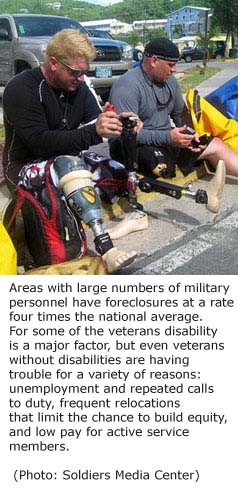
Although solid numbers on veteran foreclosures are not available, RealtyTrac, a Web site that follows foreclosures nationwide, reported earlier this year that areas with large numbers of military personnel have foreclosures at a rate four times the national average.
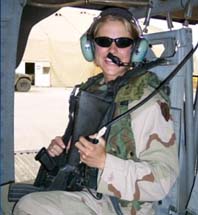
Sgt. Jill Stevens, was a member of 1st Battalion, 211th Aviation Regiment, Utah National Guard
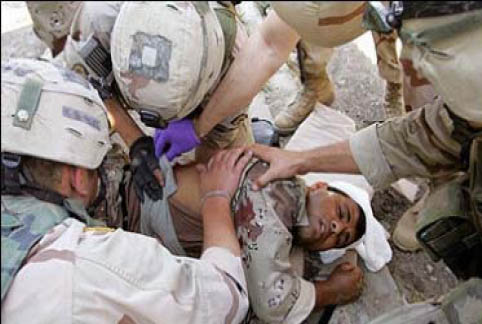
Who is most likely to develop PTSD?
1. Those who experience greater stressor magnitude and intensity,
unpredictability, uncontrollability, sexual (as opposed to
nonsexual) victimization, real or perceived responsibility,
and betrayal.
2. Those with prior vulnerability factors such as genetics,
early age of onset and longer-lasting childhood trauma, lack
of functional social support, and concurrent stressful life
events.
3. Those who report greater perceived threat or danger, suffering,
upset, terror, and horror or fear.
Veterans with PTSD have profound and pervasive problems in their daily lives. These often include migraines, intestinal complaints, immune system problems, dizziness, chest pain, and discomfort in other parts of the body. Often, medical doctors treat the symptoms without being aware that they stem from PTSD.
These problem often mask problems in family and other important relation-ships, problems with employment, trouble with the criminal justice system, and ultimately suicide. CBS News reported in November 07, that nearly 20 veterans commit suicide EVERY DAY.
If you can read, thank a teacher. If you are free, thank a veteran. You owe your freedom to Veterans. These are not disposable people to be kicked to the curb like dog droppings. Don't be so quick to judge a man "who just isn't the same."
All this hard news notwithstanding; it's crucial that the Veteran and his family hold on to their core values and most important,
DON'T GIVE UP!
PTSD does create permanent changes in brain function but it does not have to ruin your lives forever. Just as an oyster can create a pearl by creating layer after layer of nacre to protect itself from the constant irritation of the grain of sand, so can the Veteran and their families build up layers and layers of understanding and new neural pathways to manage the symptoms.
Thousands of veterans have committed suicide on the installment plan, with obesity, drugs and alcohol, or they've killed themselves outright in a car wreck or with a gunshot.
But Millions of Veterans have found ways to have joyous successful lives, to achieve their goals, and serve their fellow man.
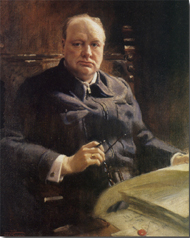
YOU CAN TOO. Remember the words of the immortal Winston Churchill...
"Never, Never, Never give up."
The real tragedy in life is not in not reaching your goal. The real tragedy is in having no goal to reach.
Never, Never, Never Give Up!
You may want to check out the video we have embedded HERE. It's called"Iraq for Sale"by documentary film maker Robert Greenwald. It is somewhat dated, but is still relevant to the world of Government Contracting.
It tells the story of the no bid, sole source contracts given to Blackwater, Haliburton, Kellogg, Brown, and Root and others. Troublesome. It's worth the seventy five minutes to watch it.
The Wisdom of the Dakota
Indians
The tribal wisdom of the Dakota Indians,
passed on from generation to generation, says that, "When
you discover that you are riding a dead horse, the best strategy is to
dismount."
However in government and in much of corporate
America more advanced strategies are often employed. Such as:
1. Buying a stronger whip.
2. Changing riders.
3. Appointing a committee to study the horse.
4. Arranging to visit other countries to see how other cultures ride horses.
5. Lowering the standards so that dead horses can be included.
6. Reclassifying the dead horse as living impaired.
7. Hiring outside contractors to ride the dead horse.
8. Harnessing several dead horses together to increase speed.
9. Providing additional funding and/or training to increase the dead horse's
performance.
10. Doing a productivity study to see if lighter riders would improve
the dead horse's performance.
11. Declaring that as the dead horse does not have to be fed, it is less
costly, carries lower overhead and therefore contributes substantially
more to the bottom line of the economy than live horses.
12. Rewriting the expected performance requirements for all horses.
And last but not least:
13. Promoting the dead horse to a supervisory position.
Thanks to our Philadelphia connection, Professor Gerald Ney for this informative email:
Geopolitical Diary: The Medvedev Doctrine
Russian President Dmitri Medvedev gave an extraordinary interview on
Russian television's Channel One. In the course of the
interview, Medvedev unveiled a five-point doctrine that would govern
Russia's foreign policy going forward. It came in the course of an
interviewer's questions, but the statement was obviously well thought
out and planned. It is to be seen as a statement of Russian national
policy and is worth presenting here verbatim in translation by the
Kremlin:
"I will make five principles the foundation for my work in
carrying out Russia's foreign policy. First, Russia recognizes the
primacy of the fundamental principles of international law, which define
the relations between civilized peoples. We will build our relations
with other countries within the framework of these principles and this
concept of international law. Second, the world should be multipolar. A
single-pole world is unacceptable. Domination is something we cannot
allow. We cannot accept a world order in which one country makes all the
decisions, even as serious and influential a country as the United
States of America. Such a world is unstable and threatened by conflict.
Third, Russia does not want confrontation with any other country. Russia
has no intention of isolating itself. We will develop friendly relations
with Europe, the United States, and other countries, as much as is
possible. Fourth, protecting the lives and dignity of our citizens,
wherever they may be, is an unquestionable priority for our country. Our
foreign policy decisions will be based on this need. We will also
protect the interests of our business community abroad. It should be
clear to all that we will respond to any aggressive acts committed
against us. Finally, fifth, as is the case of other countries, there are
regions in which Russia has privileged interests. These regions are home
to countries with which we share special historical relations and are
bound together as friends and good neighbors. We will pay particular
attention to our work in these regions and build friendly ties with
these countries, our close neighbors. These are the principles I will
follow in carrying out our foreign policy. As for the future, it depends
not only on us but also on our friends and partners in the international
community. They have a choice."
The interviewer then asked for greater definition of the Russian areas
of interest. Medvedev replied, "The countries on our borders are
priorities, of course, but our priorities do not end there."
The most important points to take away from this, from our point of
view, are as follows. First, the events in Georgia are not to be seen as
isolated, but as part of a general shift in Russian policy. Second, the
Russians are claiming responsibility for Russian citizens anywhere. This
is particularly important in the Baltics, where Russian citizens
constitute substantial minorities, and in Ukraine. Russia is making it
clear that the treatment of Russians in other regions is a fundamental
interest in its foreign policy. Third, the Russians are declaring a
sphere of interest in the former Soviet Union, and saying that friendly
relations with these countries is essential to Russia. This also means
that these countries may not have the option of pursuing policies that
Russia regards as unfriendly. Finally, Russian interests are not
confined to the former Soviet Union. That obviously means that they
extend to Eastern Europe and, in all likelihood, the Middle East as
well.
We see this interview as not quite a formal doctrine, but a clear
indication of Russian thinking. It is clear that the Russians have now
publicly announced what is obvious: Russia has a new foreign policy, and
it is ambitious and will unfold quickly rather than slowly.
- - - -
With our attention turned to Iraq and Iran, the comment "...will unfold
quickly rather than slowly" should be of great interest to all. It may
be getting ugly soon. Look to the Baltic states as a flash point
area....
Here's an inspirational message sent in by Dennis Stevens out in the basin. Thanks to Dennis and to "Sunshine" Faye Hall for sending it 'round.
And another interesting video
Thanks to Ralph Doolin in Tennesse for this funny link. Well, maybe not so funny.
A happy story....Sack Lunches on a Plane to Chicago
I put my carry-on in the luggage compartment and sat down in my assigned seat. It was going to be a long flight. 'I'm glad I have a good book to
read. Perhaps I will get a short nap,' I thought.
Just before take-off, a line of soldiers came down the aisle and filled
all the vacant seats, totally surrounding me. I decided to start a
conversation. 'Where are you headed?' I asked the soldier seated
nearest to me. ' Chicago - to Great Lakes Base. We'll be there for two
weeks for special training, and then we're being deployed to Iraq '
1. Two vultures board an airplane, each carrying two dead raccoons. The stewardess looks at them and says: "I'm sorry, gentlemen, only one carrion allowed per passenger."
2. Two boll weevils grew up in South Carolina. One went to Hollywood and became a famous actor. The other stayed behind in the cotton fields and never amounted to much. The second one, naturally, became known as the lesser of two weevils.
3. Two Eskimos sitting in a kayak were chilly, but when they lit a fire in the craft, it sank, proving once again that you can't have your kayak and heat it, too.
4. A three-legged dog walks into a saloon in the Old West. He moseys up to the bar and announces: "I'm looking for the hombre who shot my paw."
5. Did you hear about the Buddhist who refused Novocain during the root canal? He wanted to transcend dental medication.
6. A group of chess enthusiasts checked into a hotel and were standing in the lobby discussing their recent tournament victories. After about an hour, the manager came out of his office and asked them to disperse. But why? they asked, as they moved off. Because, he said, "I can't stand chess nuts boasting in an open foyer."
7. A woman has twins and gives them up for adoption. One of them goes to a family in Egypt and is named Ahmal. The other goes to a family in Spain; they name him Juan. Years later, Juan sends a picture of himself to his birth mother. Upon receiving the picture, she tells her husband that she wishes she also had a picture of Ahmal. Her husband responds, "They're twins! If you've seen Juan, you've seen Ahmal."
8. These friars were behind in their belfry payments, so they opened up a small florist shop to raise funds. Since everyone liked to buy flowers from the men of God, a rival florist across town thought the competition was unfair. He asked the good fathers to close down, but they would not. He went back and begged the friars to close. They ignored him. So, the rival florist hired Hugh MacTaggart, the roughest and most vicious thug in town to persuade them to close. Hugh beat up the friars and trashed their store, saying he'd be back if they didn't close up shop. Terrified, they did so, thereby proving that Hugh, and only Hugh, can prevent florist friars.
9. Mahatma Gandhi, as you know, walked barefoot most of the time, which produced an impressive set of calluses on his feet. He also ate very little, which made him rather frail and with his odd diet, he suffered from bad breath. This made him . what? (Oh, man this is so bad, it's good). A super callused fragile mystic vexed by halitosis.
10. And finally, there was the person who sent ten different puns to friends, with the hope that at least one of the puns would make them laugh. Unfortunately, no pun in ten did.
A large defense contractor finally succeeded in building a computer able to solve any strategic or tactical problem. Military leaders assembled in front of the new machine and were instructed to feed a difficult tactical problem into it. They described a hypothetical situation to the computer and then asked the pivotal question, "Attack or retreat?"
The computer hummed away for an hour and then came up with the answer, "Yes."
The generals looked at each other, stupefied.
Finally one of them submitted a second request to the computer, "Yes what?"
Instantly the computer responded, "Yes, Sir!."
God Bless Detroit, Michigan
A good friend of mine sent me this email regarding the fate of Detroit. Much of what the author has to say is pure race hatred and misunderstanding in my opinion. On the hatred scale 5 to 7 is coded here as orange.Nine or ten gets pure red.Ten plus is purple (as in purple prose!)
(Frosty Wooldridge (born 1947) is a US journalist, writer, environmentalist, traveler)
DETROIT
By Frosty Wooldridge
For 15 years, from the mid 1970's to 1990, I worked in Detroit , Michigan. I witnessed the city's death from the seat of my 18-wheeler tractor trailer because I moved people out of every sector of decaying Detroit for United Van Lines.
I watched it descend into the abyss of crime, debauchery, gunplay, drugs, school truancy, car-jacking, gangs and human depravity. I watched entire city blocks burned out. I watched graffiti explode on buildings, cars, trucks, buses and school yards. Trash everywhere!
Detroiters walked through it, tossed more into it, and ignored it. (Then) tens of thousands existed, and (now) hundreds of thousands exist on federal welfare, free housing, and food stamps! With Aid to Dependent Children, minority women birthed eight to 10, and in one case, one woman birthed 24 children as reported by the Detroit Free Press, all on American taxpayer dollars. A new child meant a new car payment, new TV, and whatever mom wanted. I saw Lyndon Baines Johnson's 'Great Society' flourish in Detroit . If you give money for doing nothing, you will get more hands out taking money for doing nothing.
Read the rest here:
Our good friend Nuclear Dave sent me a video link that blew my mind, then gave me a story idea about people who could fly like in the Matrix. I think you will love the video posted to safeshare.tv from eclipuri.ro ( I can't believe I'm posting a video from Romania!)
The "Oathkeepers" actually exist. They have a strident message and faith in their cause. They say they have taken an oath to preserve, protect, and defend the Constitution of the United States against all enemies, foreign and domestic. They pledge:
1. We will NOT obey orders to disarm the American people.
2. We will NOT obey orders to conduct warrantless searches of the American people
3. We will NOT obey orders to detain American citizens as “unlawful enemy combatants” or to subject them to military tribunal.
4. We will NOT obey orders to impose martial law or a “state of emergency” on a state.
5. We will NOT obey orders to invade and subjugate any state that asserts its sovereignty.
6. We will NOT obey any order to blockade American cities, thus turning them into giant concentration camps.
7. We will NOT obey any order to force American citizens into any form of detention camps under any pretext.
8. We will NOT obey orders to assist or support the use of any foreign troops on U.S. soil against the American people to “keep the peace” or to “maintain control.”
9. We will NOT obey any orders to confiscate the property of the American people, including food and other essential supplies.
10.We will NOT obey any orders which infringe on the right of the people to free speech, to peaceably assemble, and to petition their government for a redress of grievances.
Oathkeepers Video
ALL VETERANS: Be careful when deciding who you want to support with money or votes.
U.S. military illegally discharging veterans with personality disorder, report says
By Mary E. O'Leary
The New Haven (Conn.) Register
NEW HAVEN, Conn. — The Department of Defense has illegally discharged hundreds of veterans in the past decade by not following their own protocols when making a diagnosis of personality disorder, which denies them certain medical benefits and carries a stigma that hurts re-entry to civilian life.
That conclusion is based on data collected from the Department of Defense as the result of two Freedom of Information suits filed by the Veterans Services Clinic at Yale Law School on behalf of its clients, Vietnam Veterans of America.
A person let go from military service with a diagnosis of personality disorder cannot access retirement disability benefits or severance disability payments and they may not qualify for monthly service connected compensation and timely health care from Veterans Affairs.
Post-traumatic stress disorder among veterans of the nation's wars of the past decade has skyrocketed, experts say - and there is no worse result than what happened in Gilroy CA this week, when an Iraq war veteran allegedly killed his young sister, himself and probably their mother.
Textbook warning signs of PTSD had been apparent for months with former Army Spec. Abel Gutierrez. But although police, veterans counselors and Gutierrez's family tried to help him, in the end it was not enough.
A Pew Research Center study this winter found that 37 percent of veterans who had served in Iraq and Afghanistan believe they have PTSD, as opposed to 16 percent of those who served in the military before 2001.
A lot of this stress is blamed on more-frequent redeployments for troops in the modern volunteer military. Some soldiers serve four tours of duty in war zones.
"Redeployment is definitely a problem," said Dr. Lucretia Mann, clinic supervisor at the Santa Cruz County Veterans Center.
"It often takes a year or more for the symptoms to stew when a vet comes home," she said. "So you need to watch for the signs. If your partner gives you an ultimatum to seek help, you have trouble on the job or can't concentrate in school, that's the time to come back to see us."
Online Resources for Someone Dating A Person with Post Traumatic Stress Disorder
PTSD, or Post Traumatic Stress Disorder, can affect almost anyone and symptoms can show up at any age. Most people suffer from PTSD as a result of some kind of traumatic event or time period in their life, such as domestic violence, rape or other sexual assault, familial violence, an automobile or airplane accident, war, terrorism, or some other violent or unsettling event. (The most prevalent cause of PTSD in the US is car crashes which happen about every five minutes. Anyone can have PTSD. aw ) Natural disasters such as a volcano, earthquake, tornado, tsunami or hurricane can also trigger PTSD in many people.
While PTS directly affects the person who has been diagnosed, it can also have a serious impact on other people in their lives who are in a relationship with them.
Our Delaware Veterans' Advocate Barry Coulter posted this illuminating article from Huffington Post. Thank you Barry. You are doing a great job! I might also mention that when someone asks what the Occupy Movement is about you might point them to this article. The 99% are tired of being governed by the best damned government money can buy. aw
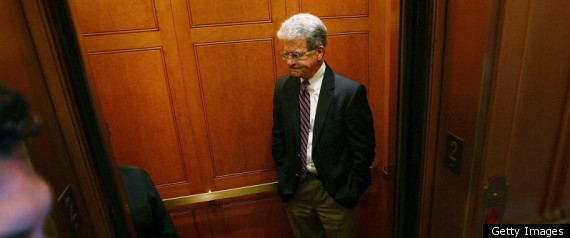
Tom Coburn: $30 Billion In Millionaires Aid Is 'Sheer Washington Stupidity'
WASHINGTON -- Millionaires are receiving billions in taxpayer-funded support every year that helps them pay for everything from child care to bad debts to boats and vacation homes, according to a report released Monday by Sen. Tom Coburn.
People who individually earned more than a million dollars in 2009 even managed to collect a total of nearly $21 million in unemployment insurance.
"From tax write-offs for gambling losses, vacation homes, and luxury yachts to subsidies for their ranches and estates, the government is subsidizing the lifestyles of the rich and famous," wrote Coburn, an Oklahoma Republican, in an accompanying letter. "Multimillionaires are even receiving government checks for not working. This welfare for the well-off -- costing billions of dollars a year -- is being paid for with the taxes of the less fortunate."
Calling the giveaways "sheer Washington stupidity," Coburn detailed in the study more than $30 billion a year that comes out of the U.S. Treasury to aid people who make more than a million a year.
We Must Be the Healers Returning War Veterans Need.
Recent comments in the media have highlighted the epidemic of suicides of military personnel, those in combat situations and those who have returned home.
It is increasingly urgent to understand and respond to the experiences of these persons, particularly the latter group, with empathic understanding of where they have been, what has happened to them and what they need from us.
Typical reactions displayed by some returning combat veterans include depression and anxiety in various forms, a sense of "not fitting in anymore," of not being able to adjust to the norms of civilian life, of intense rage of undetermined focus, and increasingly, suicide. Please read the rest of this editorial from Delaware Online here:
Veterans Benefits, Other Federal Benefits Protected From Garnishment
The U.S. Department of the Treasury recently enacted a new regulation that requires banks to protect federal benefits from being garnished. Before these protections were in place, exempting federal benefit payments from being garnished was hit or miss depending on your showing up in court or proving that the funds in your account were exempt. Here is what you need to know:
--The new law became effective May 1, 2011, and requires banks to review accounts when they receive a garnishment order. Read the whole story here:
To All Veterans Caught Up in the Dance of Addiction, Words of Courage
The Dances We Do With Other People
…by Julia A. Wilson
How old were you when you learned to dance? I was forty. Why so old you might ask? I spent twenty years dancing by myself on a bar stool, I thought I was cool and sexy. Actually I was afraid of you, them, and any others who challenged my way of life. It wasn’t until I began to feel God’s love in my heart that I became unafraid of you, them, and all of the others who had challenged my old way of life.
Today I dance joyfully with my hands in the air feeling God’s hands touching mine. I’ve never felt more serenity or joy in my life, ever! I attribute it all to God’s loving touch.
Some people are afraid to talk about how God has touched their life. I used to be one of those people and because I didn’t acknowledge God to others my blessings were short lived. I thought I could keep God to myself, but I understand now that he wants me to testify of His power in my life.
He saved me from a life of destitution. I was an active alcoholic and drug addict for over thirty years. After years of listening to non-believers I was convinced I would die in the gutter and absolutely believed that’s exactly where I deserved to be.
Yet here I stand before you, healed and transformed into the person God always wanted me to be. I did little to make this happen, or so it seems. The hardest thing I did was step out on Faith and believed that God would save me if I served Him well. He did that for me and has thus allowed me to share my life with others who were once just as lost as I was. This is how it works for me; and because it has worked, I now dance with other people sharing God’s work in my life.
Thanks to our friend and contributor Terry Reed for this insight:
Far Be It For An American President To Publicly Congratulate (Let Alone Even Mention) AMERICAN Ingenuity And AMERICAN PRIVATE ENTERPRISE For The Miracle Rescue Of The Chilean Miners.
Schramm Inc. of West Chester , Pennsylvania built the drills and equipment used to reach the trapped miners.
Center Rock Company, also from Pennsylvania, built the drill bits used to reach the miners.
UPS, the US shipping company, delivered the 13-ton drilling equipment from Pennsylvania to Chile in less than 48 hours.
Crews from Layne Christensen Company of Wichita Kansas and its subsidiary Geotec Boyles Bros. worked the drills and machinery to locate and reach the miners and then enlarge the holes to ultimately rescue them.
Jeff Hart of Denver Colorado was called off his job drilling water wells for the U.S. Army's forward operating bases in Afghanistan to lead the drilling crew that reached the miners.
Atlas Copco Construction Mining Company of Milwaukee, Wisconsin provided consulting on how to make drilling equipment from different sources work together under differing pressure specifications.
Aries Central California Video of Fresno California designed the special cameras that were lowered nearly a mile into the ground sending back video of the miners.
Zephyr Technologies of Annapolis Maryland, made the remote monitors of vital signs that miners will wear during their ascent.
NASA Engineers designed the " Phoenix " capsule that miners would be brought to the surface in, and provided medical consulting, special diets and spandex suits to maintain miners' blood pressure as they're brought back to the surface.
Oh, and Canadian-based Precision Drilling Corp. and South-African company Murray & Roberts, drilled a backup rescue shafts in case the American rig failed. Which it didn't.
Capitalism Saved the Miners
The profit = innovation dynamic was everywhere at the mine rescue site.
Three cheers for the Red, White, and Blue.
Hip hip, Hooray! Hip hip, Hooray! Hip hip, Hooray!
aw
Humor Therapy
from my old buddy Tim
An old cowboy sat down at the Starbucks
and ordered a cup of coffee.
As he sat sipping his coffee,
a young woman sat down next to him.
She turned to the cowboy and asked, 'Are you a real cowboy?'
He replied, 'Well, I've spent my whole life breaking colts, working cows, going to rodeos, fixing fences, pulling calves, bailing hay, doctoring calves, cleaning my barn, fixing flats, working on tractors, and feeding my dogs, so I guess I am a cowboy.'
She said, 'I'm a lesbian. I spend my whole day thinking about naked women.. As soon as I get up in the morning, I think about naked women. When I shower, I think about naked women. When I watch TV, I think about naked women. It seems everything makes me think of naked women.'
The two sat sipping in silence.
A little while later, a man sat down on the other side of the old cowboy and asked, 'Are you a real cowboy?'
He replied, 'I always thought I was, but I just found out I'm a Lesbian.' Feedback to the editor
There is a new website that offers hope to returning warriors and their families: 'Not Alone dot com.
This site is endorsed by Dr. Ray Scurfield, published author, combat veteran, and 25-year career at the VA, including Director the National Center for PTSD in Honolulu:“I am just blown away with the scope of your collective synergy, talent, vision, and passion. Your team is going to be able to put together an ever-evolving product that will actually be able to make a difference in the lives of many active duty personnel, veterans and their families. As a vet, my deepest appreciation.” Check it out. Seems to have great content. aw
The following information was originally put out by the Army Times, September, 2008. Some people on the web
think that it's still important to remember that there is new legislation that, for all intents and purposes, repeals the Posse Commitatus law passed back in 1868.
Brigade homeland tours start Oct. 1 3rd Infantry’s 1st BCT trains for a new dwell-time mission.
Helping ‘people at home’ may become a permanent part of the active Army
Since Oct. 1,2008 the 1st BCT has been under the day-to-day control of U.S. Army North, the Army service component of Northern Command, as an on-call federal response force for natural or manmade emergencies and disasters, including terrorist attacks.
It is not the first time an active-duty unit has been tapped to help at home. In August 2005, for example, when Hurricane Katrina unleashed hell in Mississippi and Louisiana, several active-duty units were pulled from various posts and mobilized to those areas.
But this new mission marks the first time an active unit has been given a dedicated assignment to NorthCom, a joint command established in 2002 to provide command and control for federal homeland defense efforts and coordinate defense support of civil authorities.
Are you a veteran who would like transportation training?
Contact Vietnam Veteran Troy Roper at the V.A. ~~ 801-582-1565, ext 4970. Troy's VA pilot program teaches disabled Veterans how to ride public transportation
The creator of the training has dedicated his life to helping others after waking up from a 70 mph cycle crash that almost killed him. By Julia Lyon
The Salt Lake Tribune Updated: 01/20/2010 04:27:10 PM MST
Roper, a Vietnam Veteran, has launched a pilot program at the Department of Veterans Affairs' George E. Wahlen Medical Center in Salt Lake City to teach Veterans, particularly the visually and physically disabled, how to ride public transportation.
"I'm trying to establish a lifestyle change," said Roper, who has a traumatic brain injury along with some paralysis and decreased vision. "I know after staying home for 23 months, learning to walk again, depression really sets in."
Though some training already takes place, particularly for people with vision problems, the new Transportation Accessibility Skills program will significantly
expand opportunities for veterans with physical disabilities.
Roper nearly died after crashing his BMW cycle at 70 mph. After weeks in a coma, the 59-year-old Bountiful man regained consciousness and made a plea in his prayers. Roper bargained with God that if he lived he would dedicate his life to helping people with disabilities. He is true to his word, and Utah veterans may benefit as a result. More:
DIDJA SEE THIS ON THE 6 O'CLOCK NEWS?
When George Whalen passed away the media took little note. "He was a hero and he died." was about it. He really was Stouthearted and Indomidable. Check this out:
Citation
For conspicuous gallantry and intrepidity at the risk of his life above and beyond the call of duty while serving with the 2d Battalion, 26th Marines, 5th Marine Division, during action against enemy Japanese forces on Iwo Jima in the Volcano group on 3 March 1945. Painfully wounded in the bitter action on 26 February, Wahlen remained on the battlefield, advancing well forward of the frontlines to aid a wounded Marine and carrying him back to safety despite a terrific concentration of fire. Tireless in his ministrations, he consistently disregarded all danger to attend his fighting comrades as they fell under the devastating rain of shrapnel and bullets, and rendered prompt assistance to various elements of his combat group as required... His heroic spirit of self-sacrifice in the face of overwhelming enemy fire upheld the highest traditions of the U.S. Naval Service. Read the entire citation at http://www.cmohs.org/recipient-detail/3042/wahlen-george-edward.php
Do You Think this No Longer Happens?
This is a copy of the famous Norma Perez email calling for diagnosis of Adjustment Disorder; ruling out PTSD. This diagnosis makes subsequent truthful claims of PTSD problems much more problematic for the veteran.
MS Perez's behavior seems to be a prime example of "secondary wounding" caused by a person in authority, (so they believe,) who uses their "authority" to stigmatize the veteran and deny them their lawful benefits.
Careful readers will see she has written "Consider a diagnosis of Adjustment Disorder. R/O PTSD." FYI; in medical records "R/O" means "Rule Out". It's insideous and intentional in my opinion.
Furthermore; after a careful Google search I find no mention of any disciplinary action taken regarding Norma Perez. I assume she is still doing the same job for the same pay. Not even a slap on the wrist. Plus two free trips to Washington to testify before Congress.... aw
Please correct me if I'm wrong. Contact me via email I really hope I'm wrong on this.
Norma J. Perez should be fired for cause. Perez’s actions have caused veterans to question the medical integrity of the VA mental health care system. Vets will now be asking the questions: Have I received a correct diagnosis? Or, am I being shuffled aside in an attempt to save the VA money?
VA Secretary James Peake has stated that Perez has been “counseled” and is “apologetic.” This is no consolation to the veterans who may have been misdiagnosed or to the veterans who now fear the very system meant to care for them. Peake said that Perez’s suggestion has been “repudiated at the highest level” of the VA. What does that mean? Very little, because Perez is still employed by the VA.
Secretary Peake’s message to all veterans is very clear. Perez’s suggestion was repudiated by the VA not because it was wrong, but because she got caught.
-------------------------
posted by Larry Scott
Founder and Editor
VA Watchdog dot Org
~~~~~~~~~~~~
And then there is this:
Army Doctors Pressured Not to Diagnose PTSD
Michael de Yoanna and Mark Benjamin for Salon:
For more than a year he's been seeking treatment at Fort Carson for a brain injury and post-traumatic stress disorder, the signature injuries of the Iraq war. Sgt. X is also suffering through the Army's confusing disability payment system.
But what Sgt. X wants to tell a reporter about is one doctor's appointment at Fort Carson when Sgt. X tucked a recording device into his pocket and set it on voice-activation so it would capture what the doctor said. More here:
"Feminists have long claimed that the personal is political; they have also wrestled mightily with the "mind-body" problem... The mind is part of the body. The brain as an organ needs treatment.
Psychological issues are not indicative of some feminine weakness: it is not hysteria to suffer nightmares, and rages, and crave the sweet release of drink and drugs. It is not some sign that one is a lesser man because one may have come home from Iraq whole in body but shattered in spirit.
And who bears the brunt of these brain injuries? If the servicemen and women were married, then it is their spouses and families. How many incidents of domestic violence have there been since Iraqi veterans have been coming home? How many drunken rages that have resulted in jail time after beating up the wife? How many abused children suffer?" Read the entire essay here and the original at Open Salon.
Homeless Women Veterans
Bryan Bender, Boston Globe:
As more women serve in combat zones, the share of female veterans who end up homeless, while still relatively small at an estimated 6,500, has nearly doubled over the last decade, according to the Department of Veterans Affairs. For younger veterans, it is even more pronounced: One out of every 10 homeless vets under the age of 45 is now a woman, the statistics show. ...
Overall, female veterans are now between two and four times more likely to end up homeless than their civilian counterparts, according to the VA, most as a result of the same factors that contribute to homelessness among male veterans: mental trauma related to their military service and difficulty transitioning into the civilian economy. ...More:
A Very BAD Health Habit to Get Into
Blame our Philadelphi Connection, Professor Gerald Ney;
Subject: The Most Dangerous Cake Recipe in the World
mmmm um mmmm um mummmmmmm. Nuclear! aw
5 MINUTE DOUBLE CHOCOLATE MUG CAKE
4 tablespoons flour
4 tablespoons sugar
2 tablespoons cocoa
1 egg
3 tablespoons milk
3 tablespoons oil
3 tablespoons chocolate chips (optional)
A small splash of vanilla extract
~~~~~~~~~~~~~~~~~~~
Add dry ingredients to a bowl, and mix well.
Add the egg and mix thoroughly.
Pour in the milk and oil and mix well.
Add the chocolate chips (if using) and vanilla extract, and mix again.
Pour into a LARGE coffee mug (MicroSafe) (coated with butter or Pam)
(a 4 cup Pyrex measuring cup works great) Put your mug in the microwave and cook for about 3 minutes at 1000 watts.
(Stick in a tooth pick, a fork, or some such into your confection. If it comes out clean, your personal cup delight is done.)
The cake will rise over the top of the mug, but don't be alarmed!
Allow to cool a little, and tip out onto a plate if desired.
EAT ! (this can serve 2 if you want to feel slightly more virtuous).
And why is this the most dangerous cake recipe in the world?
Because now we are all only 5 minutes away from chocolate cake at any
time of the day or night! OMG!
~~~~~~~~~~~~~~~~~~~~~~~~~~~~~~~~~~~~~~~~~~~~~~~~~~
News from the Utah DAV
Because so many sick and disabled veterans
lack transportation to and from VA medical facilities for needed treatment,
the DAV operates a nationwide Transportation Network to meet this need.
Across the nation, more than 196 DAV Hospital Coordinators (HSCs) operate
more than 180 active programs at VA hospitals and Outpatient Clinics.
These HSCs have recruited a corps of nearly 5,000 volunteer drivers whom
they coordinate to provide transportation for veterans needing this service.
Additionally DAV Departments and Chapters purchase and donate most of
the vans to the VA medical facilities for use in the Transportation Network.
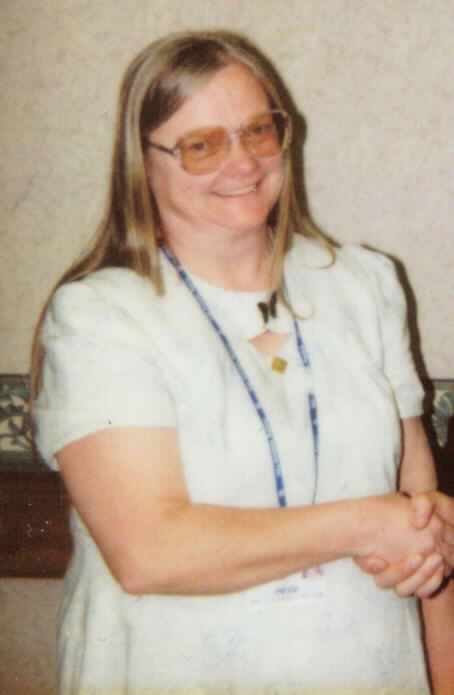
Here in Utah this important work is organized by
Heidi Hopper. If you are a sick
or disabled veteran and lack transportation to and from the Salt Lake
City VA medical facilities, call Heidi at the DAV.
If you know your history, you know that in 1934 there was an attempted coup in the United States that was thwarted largely due to the efforts of U.S. Marine Corps Major General Smedley Darlington Butler (ret.)
Among other things, Butler was only one of 19 people ever awarded the Medal of Honor twice and the only person to be awarded a Marine Corps Brevet Medal and a Medal of Honor for two different actions.
After it dawned on him how his heroism and the heroism of the troops under his command had been misused, he wrote a book called "War is a Racket" which is never heard about in school.
Butler concluded there are only two reasons to ever take up arms:
1. To defend the country against real - not manufactured - attacks
2. To defend the Bill of Rights
Watch an actor portray General Butler delivering a speech to the national convention of the Veterans of Foreign Wars: "War is a Racket."
A Veteran's worst nightmare: Martial Law and the suspension of the Constiution. Pray for the United States of America. Pray hard.
We put this video up to turn the hearts of citizens to the true costs of freedom. "Freedom Never Cries"; but sometimes Veterans do.
In honor of Steve Champeau and all the graduates, and non-graduates, of the Veterans Administration PTSD program at Menlo Park, California and Denver, Colorado
Spread the word about this video in your emails with this link:
Prior to his 3rd district defeat Chris Cannon was leading the charge to save consumers billions of dollars by exposing hidden fees everyone pays, every time they use a credit card. These fees, negotiated in secret, forced on business, and foisted on consumers cost the public tens of billions of dollars... so we have a new law that protects us from unexpected rate changes? Chump change! Some say that challenging the banks was responsible for massive support needed to defeat Cannon.
This link is for reference only: No longer active.http://chriscannon.house.gov/ChrisCares/InterchangeFAQ.htm
Each year, in addition to interest, late fees, over-the-limit charges and other fees charged by credit card companies and their banks, consumers pay billions of dollars in hidden fees that never appear on their monthly statements.
These hidden charges are called credit card “interchange fees.” Credit card companies and their banks charge them to merchants every time a credit or debit card is used to pay for a purchase. As much as $2 of every $100 you spend goes to card issuers. (Merchants pass these fees on to consumers. aw)
Credit card companies and their banks collected more than $36 billion in interchange fees last year alone, up 17 percent from 2005 and 117 percent since 2001. The average American family is now paying more than $300 a year in hidden credit card interchange fees. Merchants are effectively left to pass along the credit card interchange fee to consumers in the form of higher prices. The credit card interchange fee increases the price of everything consumers buy, even those who don't use plastic and choose instead to pay for their purchases in cash or by check.
Credit card companies and their banks are collecting as much as 8 cents a gallon in interchange fees, even as they continue trying to keep consumers in the dark about how much they are really paying.
Americans are paying pay the highest interchange fees in the world, an average of two percent, compared with less than one percent in most other industrialized countries.
Interchange fees have a complex pricing structure, which depends on the card association, the type and size of the merchant, the type of credit card and the type of transaction. Convenience stores, supermarkets, warehouse clubs and other merchants that sell low-margin items have lower rates. Hotels and car rental businesses have higher rates. A newer premium credit card that offers more rewards will have a high rate. Among transactions, those with a credit card have higher rates than those with a signature debit card, whose rates are in turn higher than PIN debit card transactions. Sales that are not conducted in person, such as over the phone or Internet, have higher interchange rates, apparently due to their increased risk of fraud.
CREDIT CARD SCAM
There is notable disagreement among network participants on the subject of interchange fees, with card associations coming under fire for the structure and application of those fees. Merchants are increasingly seeing interchange fees as an unnecessary and growing cost over which they are powerless. Additionally, banks are now issuing credit cards with even higher interchange fees, but merchants cannot refuse to allow purchases with those cards. Therefore, merchants view issuing banks as gaining revenue at their expense, without any added value for the merchants. Merchants pass on the cost of interchange fees to their customers, who are usually unaware of this expense.
Why are Interchange Fees Hidden?
Credit card interchange fees are completely hidden from consumers, and the big credit card companies and their banks want to keep it that way. The card companies and their banks claim that interchange fees and the rules that govern merchant card acceptance are available to anyone. The truth is that only recently have the card companies bowed to public and government pressure to make their interchange fee schedules public.
Most consumers have never heard of credit card interchange fees because of Visa and MasterCard rules that make it practically impossible for merchants to tell consumers how much the fees are costing them. The fee system is too complex and there are different fees associated with different types of cards and different types of stores that merchants and their customers don't know what it actually costs to make a credit card purchase at the time it takes place.
(Lets pass legislation to make credit card interchange fees show up on your monthly statement. Since the credit card company rules make it practically impossible for merchants to tell customers how much they are really paying, lets have the credit card companies show us every month.
Who else but the Federal Government can protect us from predatory practices of the Credit Card companies and their banks? Of course we can all stop using our credit cards until the companies comply... Hey! That's not such a bad idea! Stop using credit cards!
aw)
Land of the Free, Home of the Brave. Don't blow it. Be brave.
Airliners or Thermite: You decide
Some may not see how this relates to Veterans. But here is the relevance: Veterans fought for Liberty, Justice and the American way, which includes a free media. We need to push back when we think the media is distorting the truth. Just tell your friends on the internet and email. It really works. Ask Obama.
I'm deeply concerned about our mass media. Did you see that reactionary faux comedian, Bill Moron on HBO? He physically attacked a heckler who was calling for the program to consider Dr. Steven Jones. In classic dis-information style, the "owned media" ridicules individuals who disagree with the official explanations for the World Trade Center tragedy, or the Kennedy assassination, or UFOs, or the living essence of Jesus.
Therefore, in the interest of fairness I've included some info from former BYU professor, Steven Jones. I am NOT claiming thermite was used to bring down the towers... but it makes me mad when people are attacked, or forced to retire from work, when they dare to talk about ideas that challenge "conventional wisdom".
“America is under widespread attack in cyberspace. Our freedom to use cyberspace is threatened by the actions of criminals, terrorists, and nations alike… The magnitude of cost, in terms of real dollars dedicated to defensive measures, lost intellectual capital and fraud cannot be overestimated… Unlike the air, land and sea domains, we lack dominance in cyberspace and could grow increasingly vulnerable if we do not fundamentally change how we view this battle-space.” –General James E. Cartwright, Commander, United States Strategic Command, Testimony before the House Armed Services Committee, March 21, 2007
This is an interesting position paper from a reputable bi-partisan diplomats
PSA is working with the UN Foundation to encourage the incoming Obama Administration to help lead a new era of international cooperation by strengthening the U.S.-UN relationship. The following statement, signed by more than three dozen senior foreign policy leaders, appears as a full-page ad in the New York Times.
We Agree: Renew the U.S.-UN Relationship An Opportunity and Priority for the New Administration
In today's rapidly changing world of interdependence, globalization, and transnational threats, the United States must balance a strong military with creative diplomacy to secure America's interests. We must recognize that the United Nations is a critical platform and partner for advancing international cooperation on today's global threats and challenges, such as poverty and disease, nuclear proliferation, terrorism, and climate change.
The UN cannot succeed without strong U.S. leadership and support. The next President has a unique opportunity to revitalize the U.S.-UN relationship as a symbol of America's commitment to constructive international cooperation. This investment will pay off substantially by helping to enhance our standing internationally and strengthen our ability to keep America safe and strong.
Accordingly, we, the undersigned, believe that the incoming Obama Administration should:
Make an early and visible statement on the United Nations that expresses American commitment to international cooperation through the UN;
Lead on UN efforts on nuclear proliferation, counterterrorism, climate change and the Millennium Development Goals;
Play a constructive role in UN reform efforts and updating the UN's management and budgetary systems;
Pay our debts on time, work to remove Congressional caps, and alter the schedule of U.S. payments so that we are in a position to honor our treaty obligations;
Engage with the UN on the shared interests of stabilizing Iraq and Afghanistan and supporting effective democratic governments in those countries;
Obtain a seat on the faltering Human Rights Council and work to influence it from within;
Underscore our commitment to the system of international agreements and treaties by seeking Senate consent for key treaties signed but not ratified;
Place well-qualified Americans in open positions at the UN;
Help manage the growing workload assigned to UN peacekeeping by providing logistical and management expertise and other support needed to enhance UN capacities.
Signatories
Madeleine Albright
Secretary of State 1997-2001
Gen. Brent Scowcroft
National Security Advisor 1974-77, 1989-93
Lee Hamilton
US Congressman (D-IN) 1965-99
Warren Rudman
US Senator (R-NH) 1980-92
Howard Baker
US Senator (R-TN) 1967-85
Samuel Berger
National Security Advisor, 1997-2001
Gen. Charles G.Boyd
Pres., Business Executives for National Security
Harold Brown
Secretary of Defense 1977-81
Zbigniew Brzezinski
National Security Advisor 1977-81
Warren Christopher
Secretary of State 1993-97
John Danforth
US Senator (R-MO) 1976-95
Kenneth M. Duberstein
White House Chief of Staff 1988-89
Slade Gorton
US Senator (R-WA) 1981-87, 1989-2001
Gary Hart
US Senator (D-CO) 1975-87
Rita Hauser
Chair, International Peace Academy 1992-present
Carla Hills
US Trade Representative 1989-93
Karl F. Inderfurth
Assistant Secretary of State 1997-2001
Nancy Kassebaum Baker
US Senator (R-KS) 1978-97
Thomas Kean
Governor (R-NJ), 1982-90
Richard Leone
President, The Century Foundation
Amb. William Luers
President, UN Association of the USA
Donald McHenry
Ambassador to UN 1979-81
Joseph Nye
University Distinguished Service Professor, Harvard University
Edward Perkins
Ambassador to UN 1992-93
William Perry
Secretary of Defense 1994-97
Thomas Pickering
Undersecretary of State, 1997-2000
Alan Simpson
US Senator (R-WY) 1979-97
Nancy Soderberg
Representative for Special Political Affairs at the UN 1997-2001
Theodore Sorensen
White House Special Counsel 1961-63
Strobe Talbott
Deputy Secretary of State 1994-2001
Ted Turner
Founder and Chairman, UN Foundation
John Whitehead
Deputy Secretary of State 1985-88
Christine Todd Whitman
Governor (R-NJ) 1994-2001
Timothy E. Wirth
US Senator (D-CO) 1987-93
Frank Wisner
Undersecretary of State 1992-93
James D. Wolfensohn
World Bank President, 1995-2005
Gen. Anthony C. Zinni, USMC (Ret.)
 PAGE 2

 Click for the Latest & Greatest Page 1
 Click for Page 2



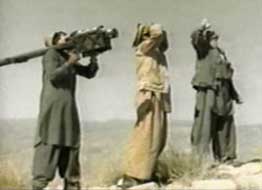 When Afghanistan was over-run by the Soviet army 20 years ago, Americans came with arms and supplies to enable the people to win back their country!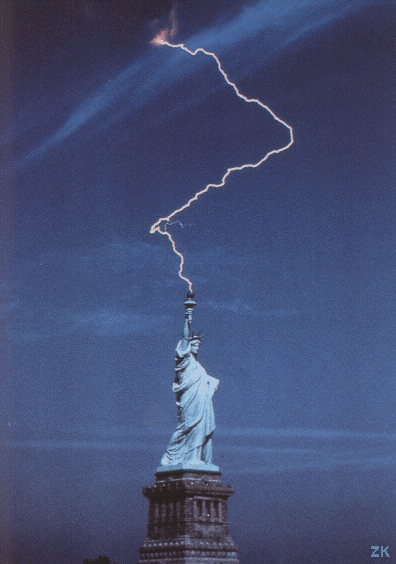
 Murph and his buddies were hanging out and planning a 5-day golf outing in Saint George.
 "I didn't have to," Murph replied. "Last I night I slumped down in my chair with a beer
to drown my sorrows. Then, the wife snuck up behind me and covered my eyes and said,
'Surprise.'
"I didn't have to," Murph replied. "Last I night I slumped down in my chair with a beer
to drown my sorrows. Then, the wife snuck up behind me and covered my eyes and said,
'Surprise.' 


 4. Those with a social environment that produces shame, guilt,
stigmatization, or self-hatred.
4. Those with a social environment that produces shame, guilt,
stigmatization, or self-hatred. 

 I put my carry-on in the luggage compartment and sat down in my assigned seat. It was going to be a long flight. 'I'm glad I have a good book to
read. Perhaps I will get a short nap,' I thought.
I put my carry-on in the luggage compartment and sat down in my assigned seat. It was going to be a long flight. 'I'm glad I have a good book to
read. Perhaps I will get a short nap,' I thought. 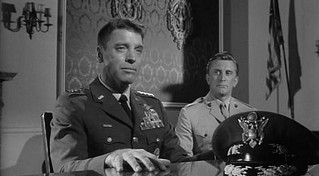

 (Frosty Wooldridge (born 1947) is a US journalist, writer, environmentalist, traveler)





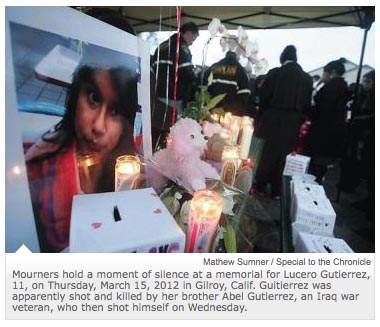 Textbook warning signs of PTSD had been apparent for months with former Army Spec. Abel Gutierrez. But although police, veterans counselors and Gutierrez's family tried to help him, in the end it was not enough.







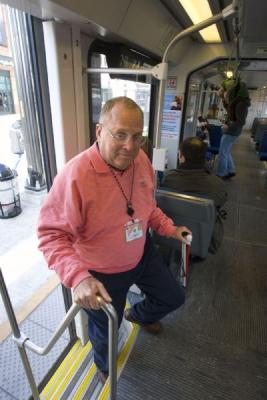 The creator of the training has dedicated his life to helping others after waking up from a 70 mph cycle crash that almost killed him.
 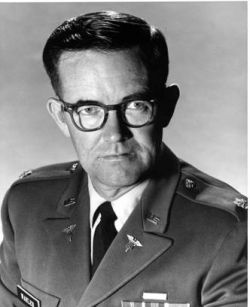 When George Whalen passed away the media took little note. "He was a hero and he died." was about it. He really was Stouthearted and Indomidable. Check this out: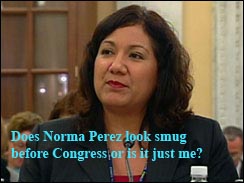


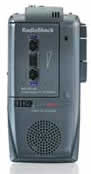 But what Sgt. X wants to tell a reporter about is one doctor's appointment at Fort Carson when Sgt. X tucked a recording device into his pocket and set it on voice-activation so it would capture what the doctor said.
  Psychological issues are not indicative of some feminine weakness: it is not hysteria to suffer nightmares, and rages, and crave the sweet release of drink and drugs. It is not some sign that one is a lesser man because one may have come home from Iraq whole in body but shattered in spirit.
 DAV
HOSPITAL SERVICE COORDINATOR:
DAV
HOSPITAL SERVICE COORDINATOR: 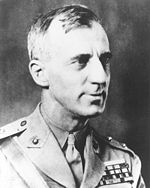


 Prior to his 3rd district defeat Chris Cannon was leading the charge to save consumers billions of dollars by exposing hidden fees everyone pays, every time they use a credit card. These fees, negotiated in secret, forced on business, and foisted on consumers cost the public tens of billions of dollars... so we have a new law that protects us from unexpected rate changes? Chump change! Some say that challenging the banks was responsible for massive support needed to defeat Cannon.

 Most consumers have never heard of credit card interchange fees because of Visa and MasterCard rules that make it practically impossible for merchants to tell consumers how much the fees are costing them. The fee system is too complex and there are different fees associated with different types of cards and different types of stores that merchants and their customers don't know what it actually costs to make a credit card purchase at the time it takes place.